Static vs dynamic QR codes
The difference is simple: a static code carries its data in the pattern itself, while a dynamic code carries a short link you control. That one distinction decides whether you can fix a mistake after printing.
Make a QR code free →Every QR code you have ever scanned is one of these two things. A static code encodes the destination directly into the black and white modules, so the pattern and the data are the same object: change the destination and you necessarily change the picture. A dynamic code encodes a short link instead, and that link redirects to wherever you point it. The printed pattern never changes, but what it opens can change as often as you like. Neither is better in the abstract. A static code is permanent, free and works without anyone operating a server; a dynamic code is editable and measurable, but depends on the redirect staying alive. The right answer comes down to one question: after this code is printed, will the destination ever need to change?
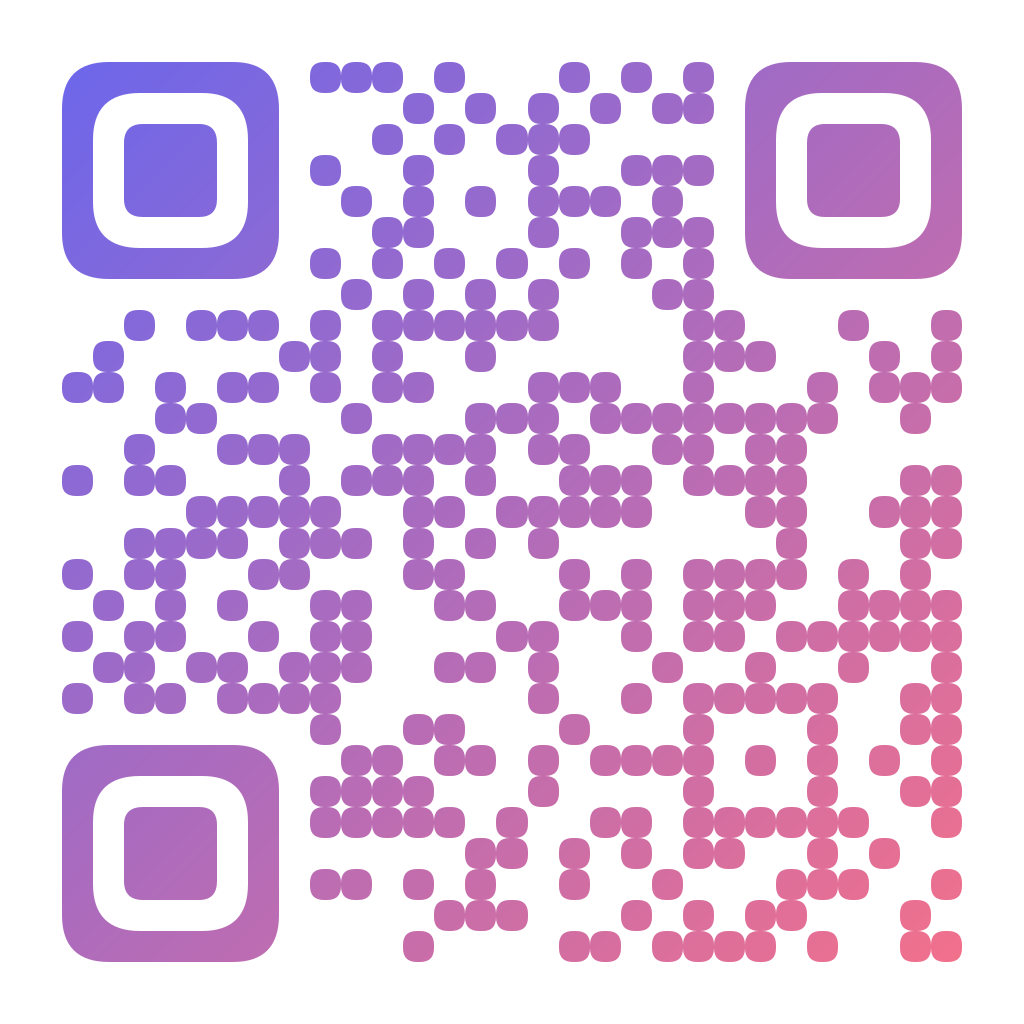
Made in CuteQRCodeA dynamic code: the pattern encodes a short link, so the destination can change without reprinting.
What actually differs
Editability
A static code is fixed once printed. A dynamic code keeps the same picture while you repoint it at a new URL, which is the whole reason it exists.
Pattern density
A long URL makes a dense static code that is harder to scan when printed small. A dynamic code encodes a short link instead, so the pattern stays open and scans from further away.
Measurement
Scans of a static code are invisible to you; nothing reports back. A dynamic code counts each resolution of its short link, so you can see whether the print run worked.
Dependency
A static code works forever with no service behind it. A dynamic code only works while the redirect resolves, which makes the provider part of your infrastructure.
How to make either one
Enter your details
Paste your link, then switch Dynamic on if you want to be able to change where it goes later. The toggle sits under the link field, and the preview updates either way.
Choose your style
Pick a module shape, colours or a gradient, and optionally add a centre logo. Watch the live preview to confirm the code stays scannable.
Download the PNG
Click Generate, then Save PNG to download a free 1024×1024 image ready for screen or print. No account required.
Which to pick, by situation
Wi-Fi, contact cards, plain text
Use static. The data is the content — there is no destination to repoint — and a static code keeps working with no dependency on anyone.
Anything printed in volume
Use dynamic. Posters, menus, packaging and signage are expensive to reprint, and a dynamic code turns a reprint into an edit.
A campaign you want to measure
Use dynamic. Scan counts are the only way to know whether the placement worked, and a static code cannot report them.
Something permanent and offline
Use static. Engraved plaques, archival labels and anything expected to outlive a subscription should not depend on a redirect that has to be renewed.
Frequently asked questions
What is the difference between a static and a dynamic QR code?
A static QR code encodes its destination directly in the pattern, so changing the destination means generating and reprinting a new code. A dynamic QR code encodes a short link that redirects, so the printed pattern stays the same while you change where it goes. Both scan identically with any phone camera.
Can I turn a static QR code into a dynamic one?
Not in place. The destination is part of the printed pattern, so a static code cannot be repointed — you would be editing the picture itself. You can generate a new dynamic code for the same destination, but anything already printed keeps the old behaviour. This is the main reason to decide before a print run rather than after.
Do dynamic QR codes scan differently?
No. A scanner sees a short URL and opens it, exactly as it would any link. The redirect happens after the scan, in the browser, and usually takes a fraction of a second. If anything a dynamic code scans more reliably, because the short link makes for a less dense pattern than a long destination URL.
Are dynamic QR codes free on CuteQRCode?
The free plan includes one active dynamic QR code with up to 500 scans a month, alongside unlimited static codes. CuteQR Pro, at $9 a month, raises that to ten dynamic codes and adds scan analytics and custom seqr.li short links.
What happens to a dynamic QR code if the service stops?
The short link stops resolving, and the printed code stops working — this is the real trade-off. A static code has no such dependency, which is why anything meant to be permanent, engraved or archival is better off static even when a dynamic code would be more convenient.
Is CuteQRCode free to use?
Yes, for everything most people need. The free plan gives you unlimited QR codes, every module shape and gradient preset, a centre logo, and 1024×1024 PNG downloads with no export limit and no account required. Free downloads carry a small "Made with CuteQRCode.com" line and include one active dynamic QR code with up to 500 scans a month. CuteQR Pro, at $9 a month, removes that attribution and adds vector SVG export, ten dynamic codes, scan analytics, and custom seqr.li short links.
Will a styled QR code still scan?
Yes. The three finder-pattern squares in the corners are always drawn in the standard proportions scanners rely on, and styling is applied only to the data modules. A live preview lets you confirm scannability before you download, and high error correction adds tolerance for logos.